
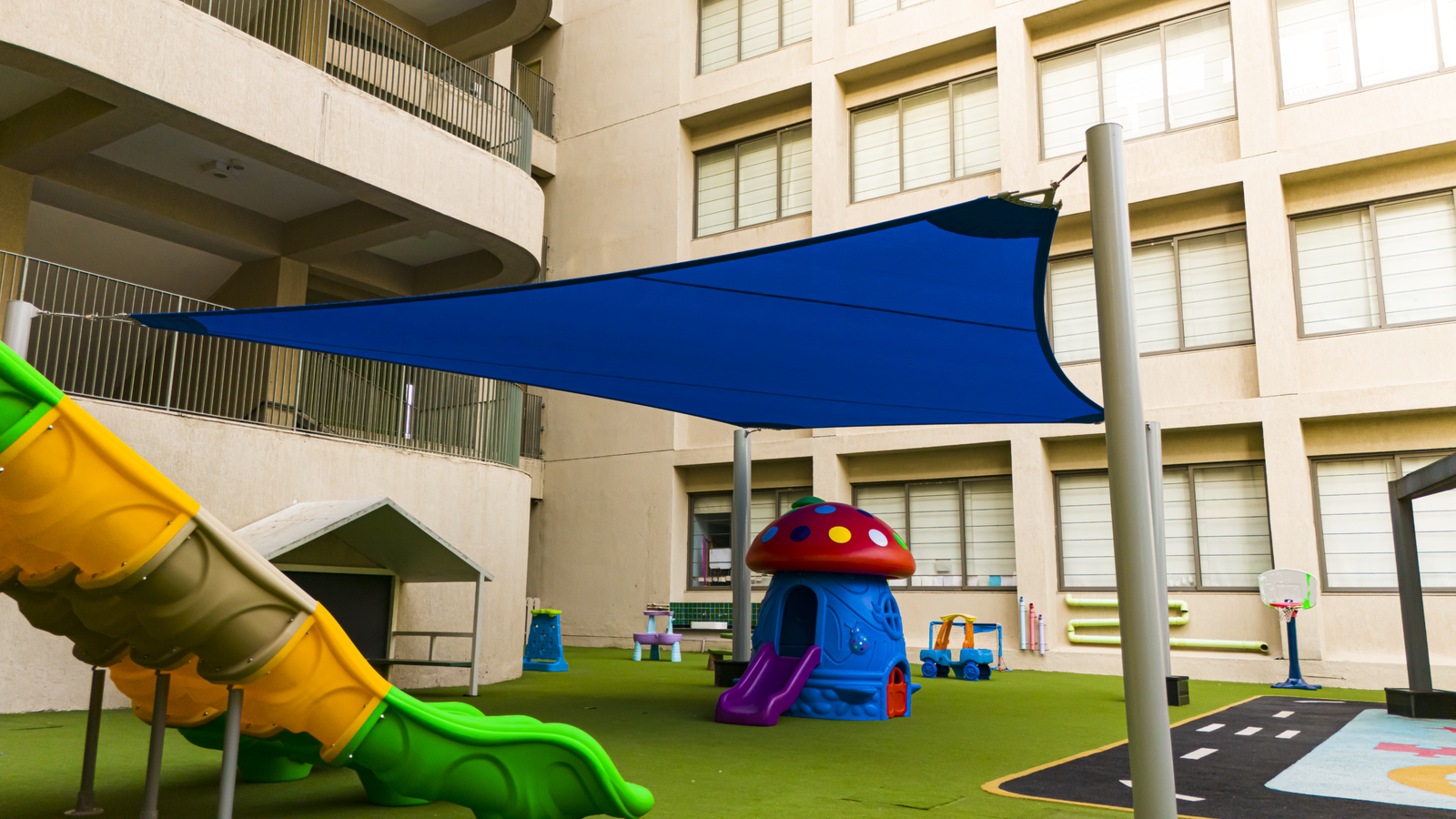
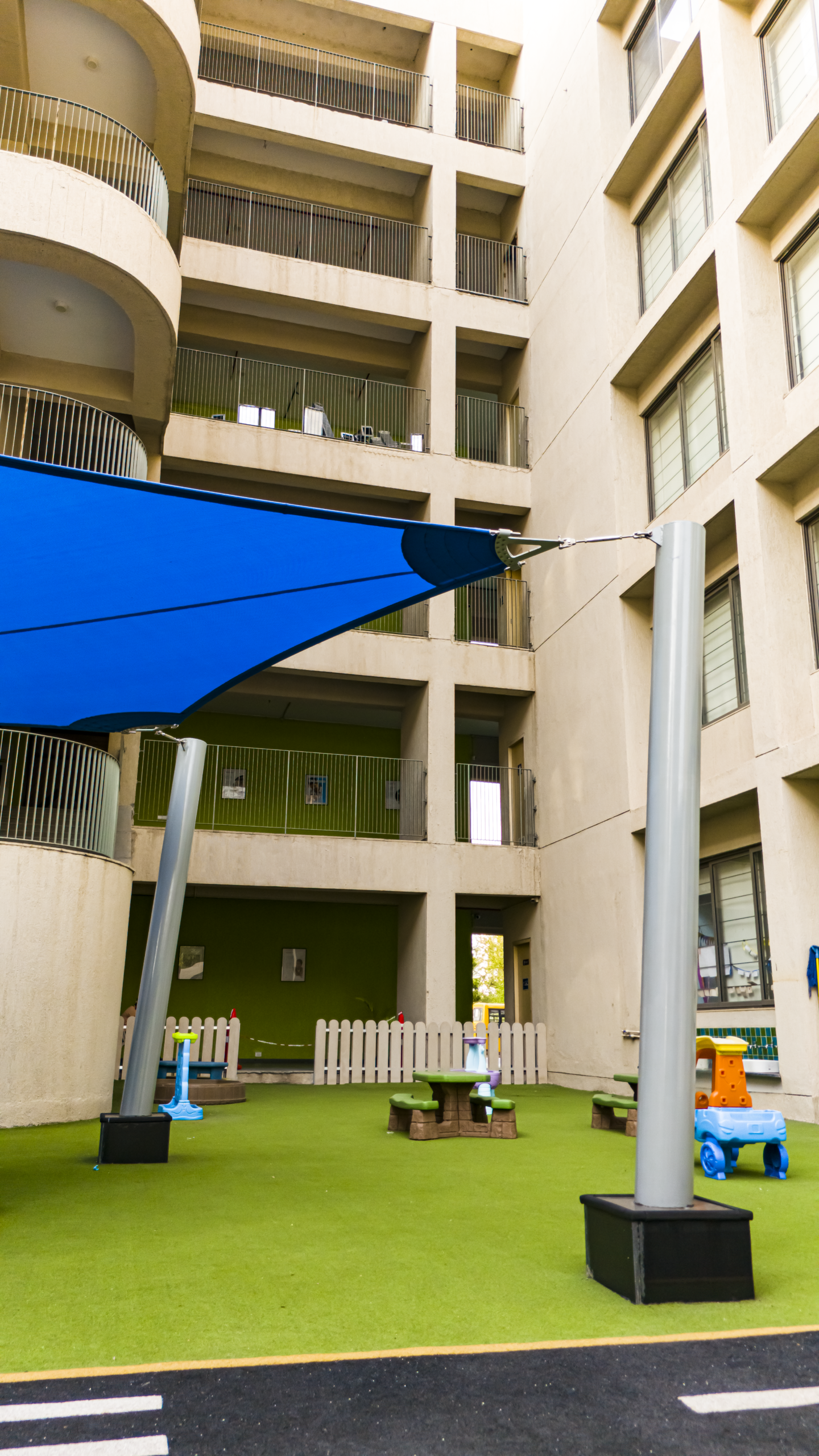
The hyperbolic shade sail is one of the most expressive, versatile and globally recognised forms in tensile membrane architecture. Defined by its characteristic high points and low points — pulling the membrane simultaneously upward and downward to create a fluid, double-curved hyperbolic geometry — the shade sail is a structural art form as much as it is a shading solution.
At MECANCO, this form is engineered across three-point, four-point and five-point configurations, with clamping terminals at each anchor point being the only visible structural element across the entire span.
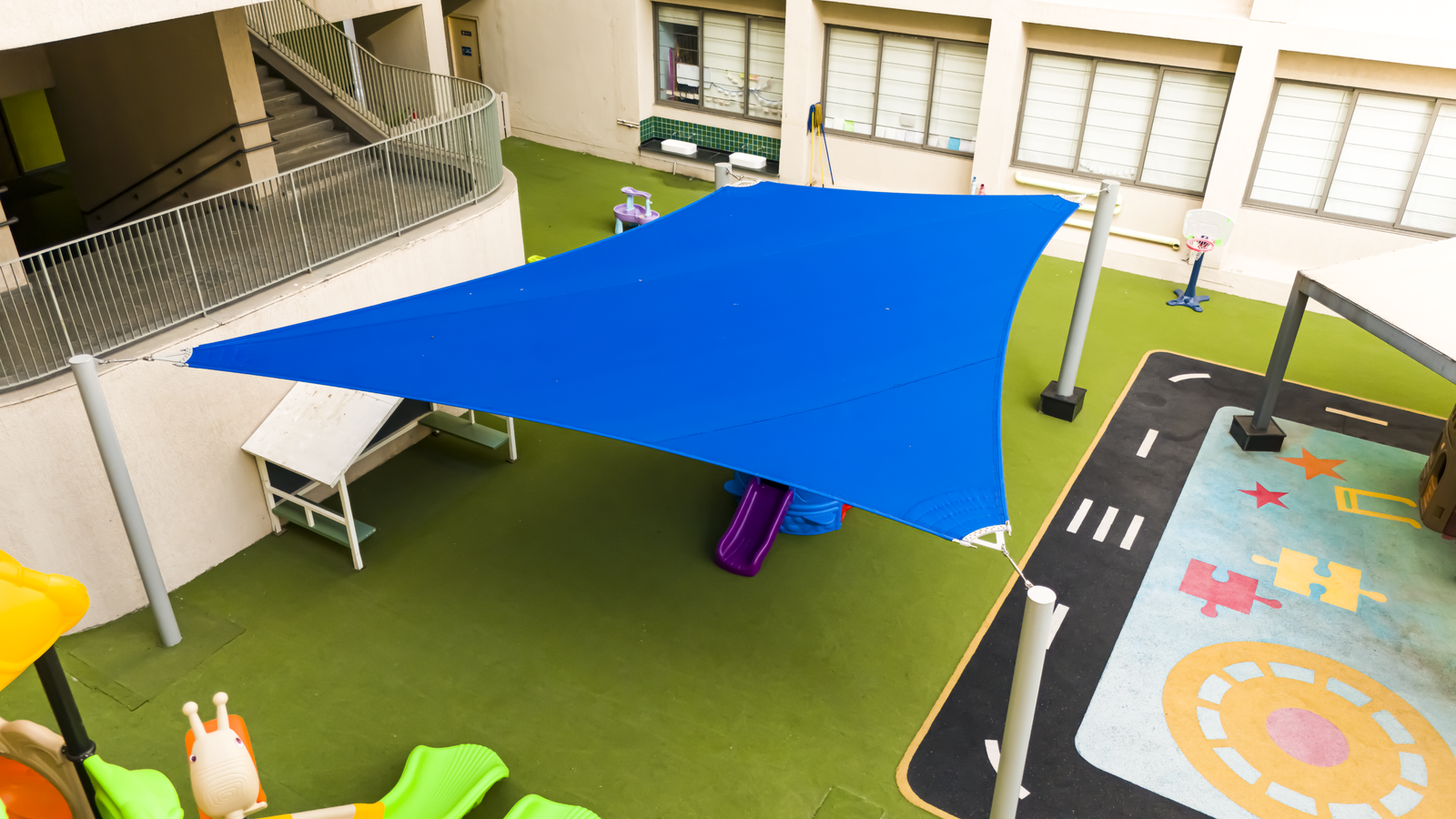
MECANCO's shade sail solutions are offered across a wide range of configurations, materials and dimensional scales — each designed and engineered to respond precisely to the functional and aesthetic demands of the project.
Triangular hyperbolic forms delivering elegant, asymmetric shading with a minimal anchor footprint.
Rectangular and square hyperbolic membranes offering generous coverage and structural clarity.
Extended multi-point sail systems enabling larger spans and more dynamic geometric compositions.
Breathable, UV protective and heat reflective mesh systems ideal for pure shading applications.
Full weather protection membranes engineered with carefully controlled drainage geometry.
Sequential overlapping sail arrangements for landscapes, plazas and large public environments.
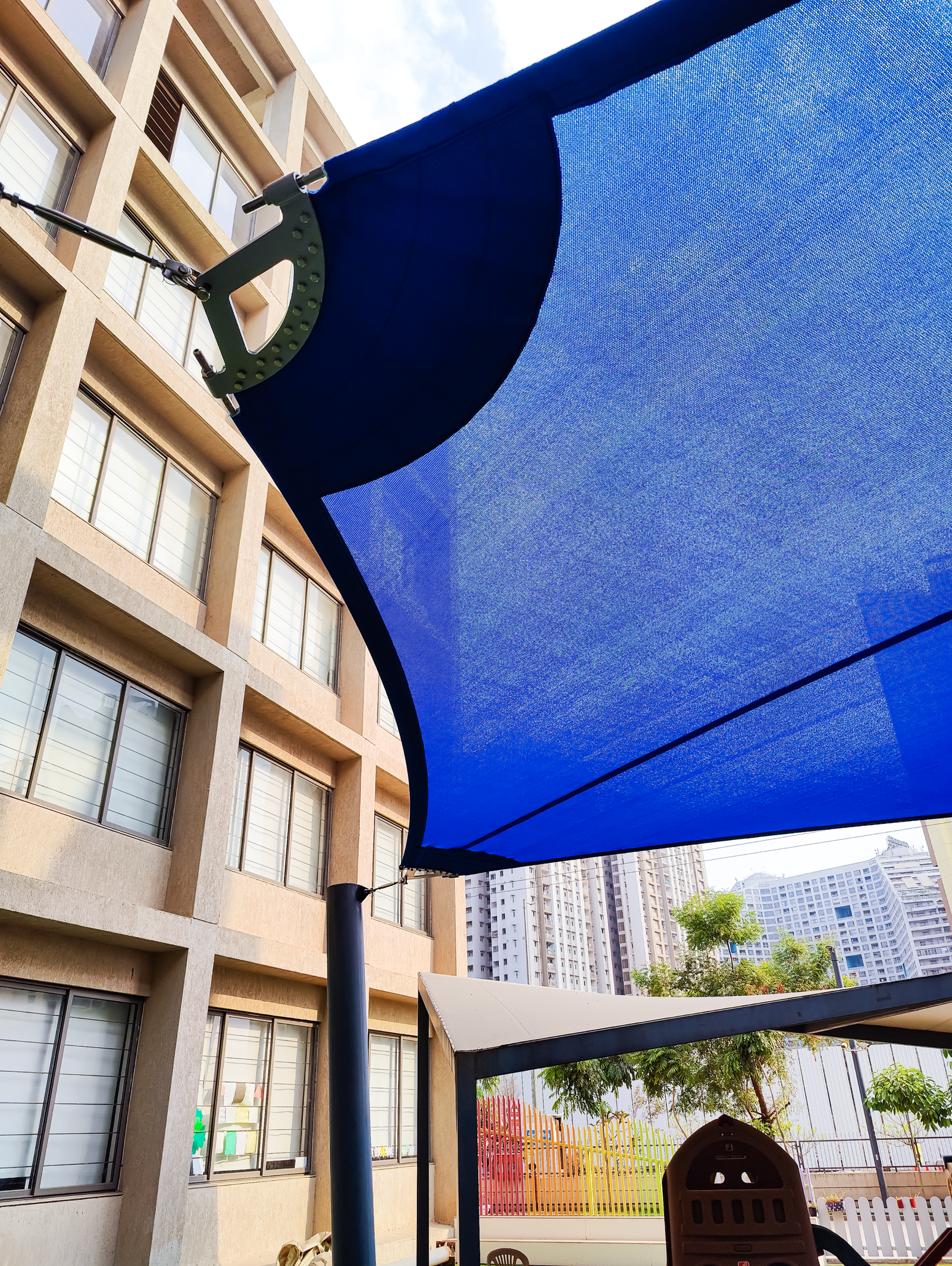
What distinguishes a MECANCO shade sail from a standard installation is the rigour of the design process behind it. Every shade sail is engineered to look right, perform right and endure across every season.
High and low points are carefully modelled to create controlled hyperbolic geometry with the right balance of form, tension and runoff.
Each project is reviewed for structural behaviour, membrane forces, wind response and anchor-point stability before execution.
Clamping brackets, terminals and end plates are engineered specifically for the geometry, load path and fixing condition of the project.
For PVC fabric applications, water ponding simulation is conducted during design to validate curvature adequacy and drainage performance.
The shade sail hyperbolic form is one of MECANCO's most widely applicable product lines — serving an extensive range of environments, climates and client types.
Swimming pool surrounds, poolside lounges and open landscape areas at luxury resorts — including oceanic environments such as the Maldives, where SS 316 hardware and natural anchoring solutions are deployed.
Dedicated shading for residential, commercial and institutional pools, where UV protection and heat reduction are the primary functional criteria.
Shade sail canopies over play equipment in schools, gardens and recreation zones — protecting children from UV exposure while keeping the environment open, vibrant and colourful.
Elegant shade solutions for outdoor landscape spaces, garden sit-outs and open public areas requiring comfort with visual lightness.
Large-span shade sail arrays delivering UV and heat protection over parking facilities, with HDPE mesh offering an economical alternative to conventional PVC fabric.
A defining tensile form across Gulf architecture, aligned with high demand for shading solutions across desert climates, high UV zones and large outdoor environments.
The shade sail hyperbolic form offers one of the widest ranges of colour and customisation possibilities within the MECANCO tensile portfolio — enabling each installation to become both a functional shading system and a visual identity statement.
HDPE mesh shade sails are available in a wide spectrum of colours, enabling vibrant and energetic compositions across schools, play parks, landscape zones and hospitality environments.
Type 1 and Type 2 PVC fabrics are offered in multiple colour variants, allowing the membrane to align seamlessly with architectural themes and project branding.
Overlapping and layered sail arrangements can combine multiple colours within a single installation — creating dynamic visual rhythm and spatial identity.
Palettes such as the blue and ivory compositions deployed in the Maldives demonstrate how colour selection becomes part of the architectural narrative rather than a secondary detail.
In the shade sail category, colour is not treated as an afterthought — it becomes an integral component of the spatial experience, architectural identity and emotional character of the environment itself.